Major Arcana · V + XV
The Hierophant and The Devil Tarot Combination
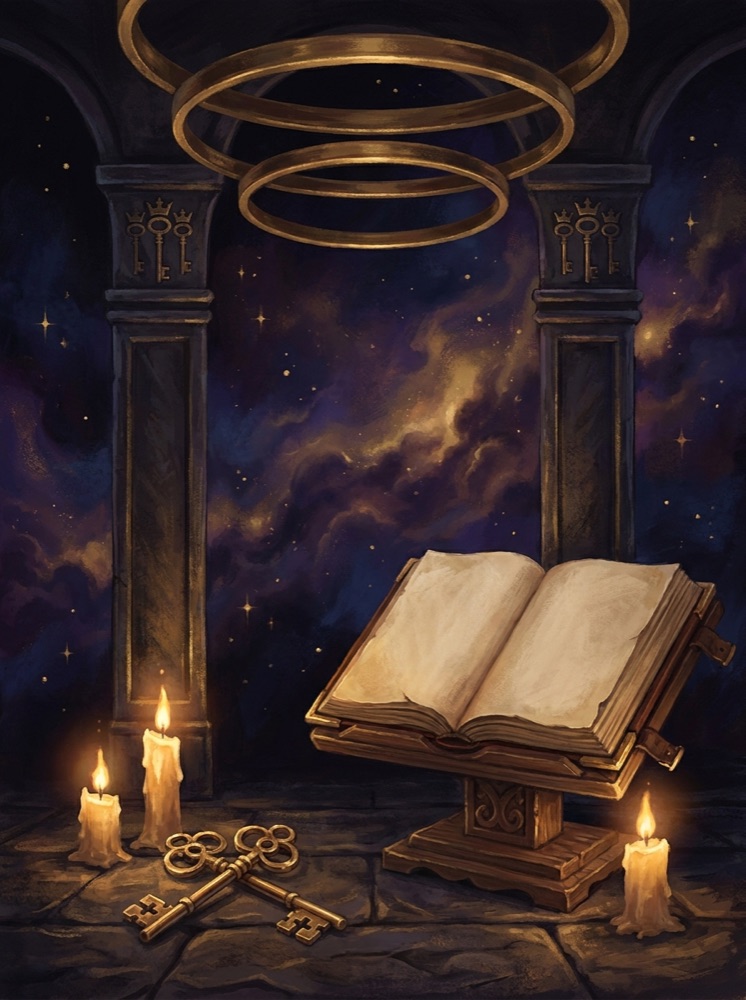
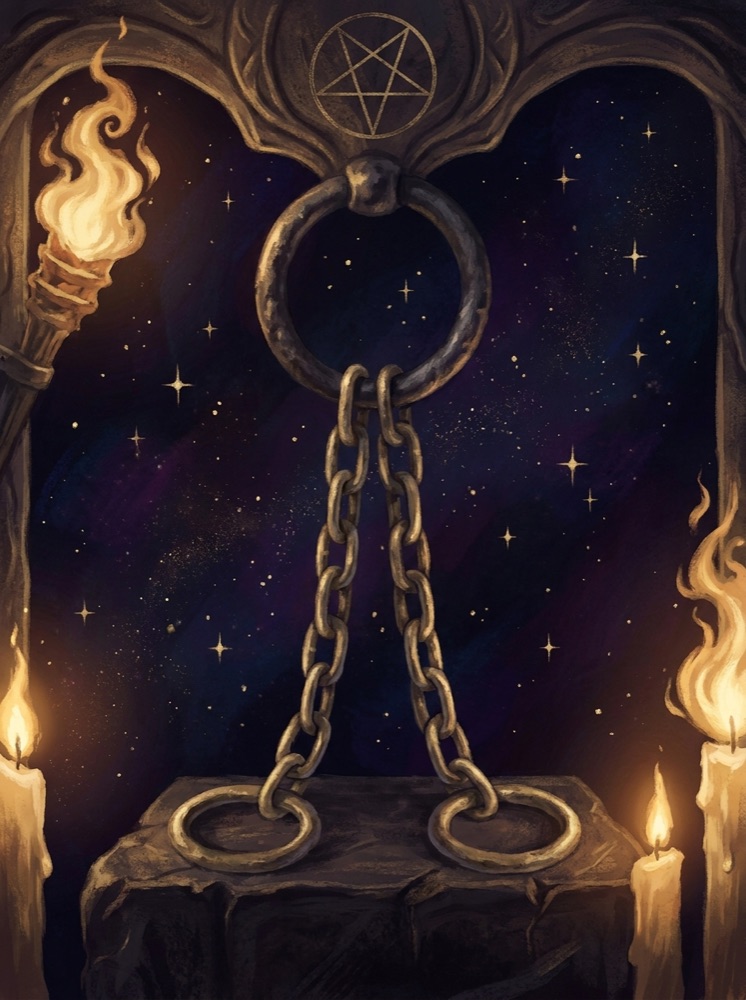
Read each card on its own first: The Hierophant meaning · The Devil meaning.
These two cards together are not about religion being wrong. They are about something more specific and harder to name: the difference between belonging to something that holds you and belonging to something that has replaced your freedom without announcing it.
That distinction can take years to notice. Sometimes it takes a certain kind of reading to make it speakable.
When The Hierophant and The Devil Meet
The Hierophant, card five, tends to reflect institutional knowledge, transmitted wisdom, and the structures through which communities pass meaning from one generation to the next. He sits between two pillars, two acolytes before him, hand raised in blessing. The Rider-Waite-Smith image is explicitly religious, but the Hierophant may also be pointing at any institutional structure that carries tradition, from a workplace culture to a family system to a spiritual community. Greer’s reading emphasizes the value in this transmission: the Hierophant holds what the Fool cannot discover alone, through structured belonging and received guidance. The card is not simply a warning.
The Devil, card fifteen, carries an image that rhymes deliberately with earlier cards. The two figures chained to his throne are the same couple from The Lovers, now in a different posture, and crucially: their chains are loose. They could remove them. The Devil tends to reflect the patterns and attachments that feel inescapable but are often held in place more by habit, shame, or fear of the alternative than by genuine necessity. Pollack reads the Devil not as evil but as the shadow of what has not been examined, the unconscious pattern that runs below the surface of choice.
The Tension Between These Cards
When these two appear together, the question they tend to surface is whether the structure is genuinely nourishing you or whether you have given it your freedom in exchange for belonging. This may not be a question about whether the institution is good or bad. It is more often a question about whether your particular relationship to it has become one where the structure does the thinking for you, where the belonging has quietly substituted for discernment.
Religion-related shame tends to appear in this pairing, not as a condemnation of religious practice, but as a recognition that for some people the container of spiritual community has been used to hold down rather than lift. The Devil’s chains are loose. The question this pair tends to raise is what it would take to notice that, and whether the belonging feels safer than the noticing.
This combination can also appear in non-religious contexts: the organization whose values you adopted wholesale without examining them, the family system whose rules you follow past the point where following them serves you, the professional culture that shaped how you think about your own worth.
This Pair in Love, Money, and Energy
In love, the Hierophant and Devil together may surface in readings about relationships shaped strongly by external codes, family expectations, religious frameworks, or community norms. The pair often asks whether those codes are being followed from genuine resonance or from the particular fear that goes with belonging: the fear that genuine freedom would mean being cast out. The Hierophant and the Devil each carry distinct angles on this, and reading them separately before combining them tends to sharpen the question.
In work and money, this pairing can reflect a professional or institutional context where certain beliefs about what is permissible, what can be charged, what can be asked for, have been absorbed from a structure rather than examined personally. The Devil’s loose chains may show up here as the money pattern that seems fixed and turns out to be a learned story about what someone like you deserves.
In matters of inner life, this is often the most important ground the Hierophant-Devil combination occupies: the spiritual life that has grown tightly bound to performance, approval, or the fear of judgment from others in the community. This does not mean the spiritual life is wrong. It may mean that the form it has taken has stopped being nourishing and started being a kind of compliance.
Reading the Two Cards Together
The Hierophant is card five and the Devil is card fifteen. Between them runs most of the journey’s middle arc: the Lovers, the Chariot, Strength, the Hermit, the Wheel, Justice, the Hanged Man, Death, and Temperance. By the time the Devil arrives, the Hierophant’s structure has been encountered, tested, and integrated or resisted through all of those intervening experiences. When the two appear together in a reading, they may suggest that the original belonging has not been fully re-examined since those middle cards. For the Devil alongside the Lovers, The Lovers and The Devil holds the relational dimension. For the Devil’s rupture through a Tower moment, The Devil and The Tower is the harder companion.
A Question to Sit With
What have you stopped questioning because the structure made you feel it was already settled?
That question is for discernment, not for rebellion. Some structures merit the trust you have placed in them. The Hierophant-Devil combination tends to ask you to hold that question honestly and let the answer be what it actually is, rather than what belonging requires it to be.
Where to go next