Is It Bad to Buy Your Own Tarot Deck?
No — and the myth that your first deck must be a gift has a traceable history. Where the rule came from, why it persists, and how to choose your own.
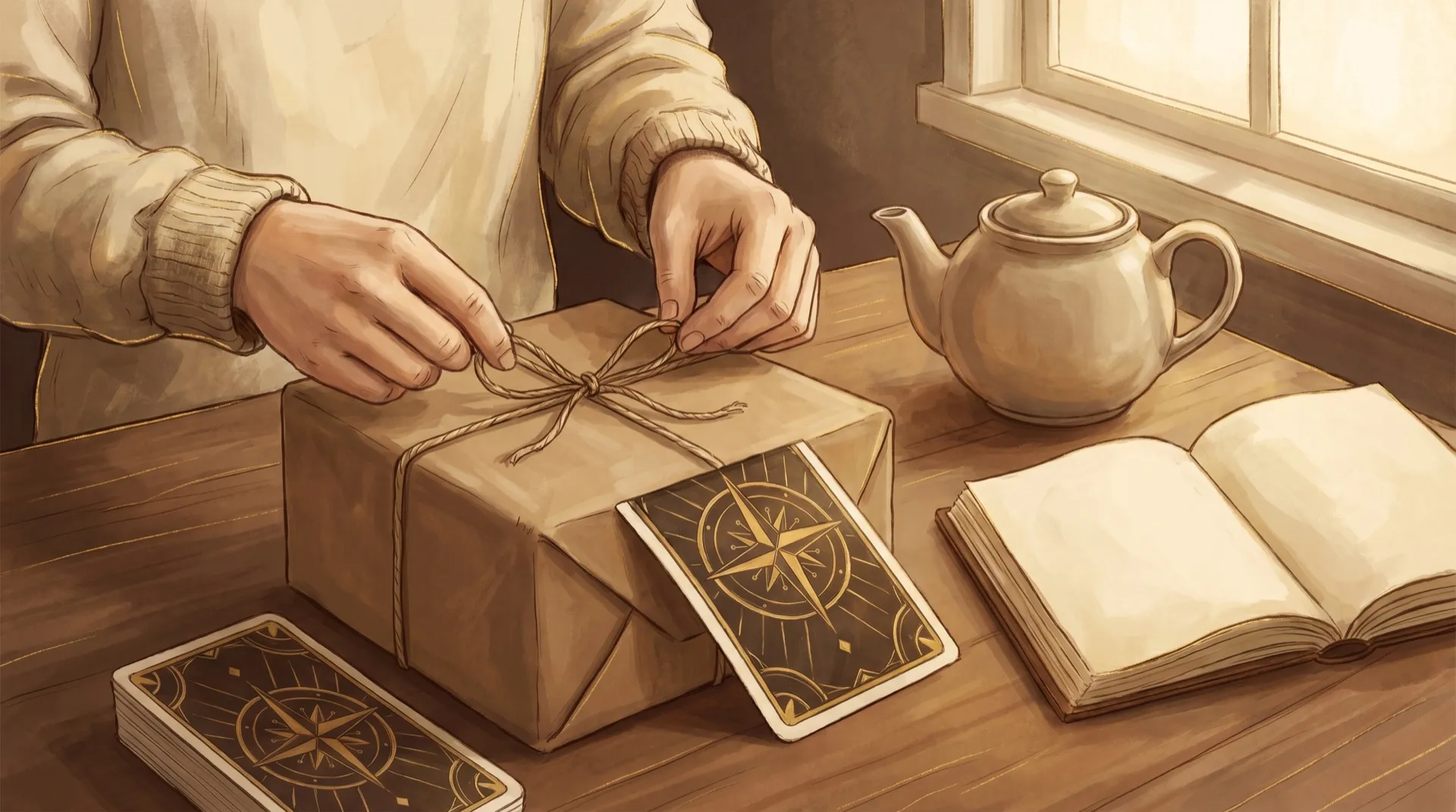
Somewhere right now, a woman is standing in a bookshop holding a deck she’s been circling for twenty minutes, and she’s about to put it back on the shelf because someone once told her that buying your own tarot deck is bad luck. Your first deck, the rule goes, must be given to you.
Put the deck in the basket. That’s the whole answer, but you came here for the why, and the why is genuinely interesting, because this myth has a history you can actually trace, and the history tells you exactly how seriously to take it.
The short answer
No, it is not bad to buy your own tarot deck. There is no curse, no diminished card-reading ability, no cosmic penalty for handing your own money to a cashier. Most experienced readers bought their first deck themselves, usually in some unceremonious place: a mall bookstore, a museum gift shop, a checkout line on a Tuesday, or these days, a secondhand shop with the previous owner’s receipt still in the box. However the deck arrives, it never seems to mind who paid for it.
More than that: choosing your own deck is, for reasons I’ll get to, actively better than waiting to be chosen for.
Where the myth actually comes from
The gift-only rule isn’t ancient. You won’t find it in the early history of tarot, which began in fifteenth-century Italy as a card game for aristocrats; nobody gifted those decks under superstition, they commissioned them like jewelry. The fortune-telling layer arrived centuries later, and the gift rule later still. Its traceable roots are more practical and more recent than the mystique suggests.
Part of it is simple scarcity. For much of the nineteenth and twentieth centuries, tarot decks were hard to get: specialty items, sometimes imported, in some eras and places carrying real social stigma. Decks moved through communities the only way they could, hand to hand. A teacher gave a student a deck because the student literally couldn’t walk into a shop and buy one. Necessity, retold for a few generations, hardened into virtue.
Part of it is the apprenticeship model. In communities where reading was a craft passed down, the gifted deck functioned as a credential: your teacher’s way of saying you’re ready. The gift wasn’t magic; it was graduation. Lifted out of that context and pasted onto a solitary beginner in a bookshop, the rule loses its meaning entirely. There’s no teacher in the transaction. There’s just a gatekeeper made of fog.
And part of it, frankly, is the general human habit of attaching entry fees to mystery. Every guarded practice grows little rules that sort insiders from outsiders. “You can’t buy your own deck” survives because it sounds like older knowledge than it is, and because repeating a rule feels like belonging to something.
Why choosing your own deck is better
Here’s what the myth gets exactly backward. The relationship that matters in tarot is between you and the images. You’ll spend hours with these seventy-eight pictures; they work, as I argued in Can Tarot Cards Tell the Future?, by giving your own mind something to complete. That works best when the images speak to you specifically, and nobody on earth is better positioned to judge that than you, standing in the shop, noticing which box your hand keeps returning to.
A gifted deck is a lovely thing when it happens. It’s also, fairly often, a deck that suits the giver’s taste. The aunt who buys you the deck she would want has given you her mirror, not yours. Some of those decks become beloved. Plenty live in drawers. The deck you chose because something in the artwork caught at you has a head start no gift can match: it’s already attached to a moment of your own wanting.
If you’re choosing a first deck, my honest advice fits in a sentence or two. Start with the Rider-Waite-Smith or something built on its imagery, because nearly every book, course, and essay (including the daily readings here) speaks that visual language. And pick the printing whose art you actually like, because you’ll practice more with a deck you enjoy looking at, and practice is the entire game, as I wrote in Do You Have to Be Gifted to Read Tarot?, a myth that pairs with this one like salt and pepper.
The grain of truth worth keeping
I don’t like leaving a myth fully demolished if there’s something human inside it worth saving, and here there is. The gift rule, underneath everything, is trying to say: a deck should enter your life with some intention. That part I’ll keep. Not because the cards care, but because you do. Rituals of beginning are how we tell ourselves something has begun.
I’ve also noticed what the waiting actually does to people, and it’s worth saying plainly. The woman who waits for a gifted deck isn’t protecting a tradition; she’s rehearsing a habit of needing permission, and tarot is a strange place to practice that, since the whole craft, done honestly, is about taking your own noticing seriously. Buying the deck yourself is a small act with the right grain to it. It says: my curiosity doesn’t require a sponsor.
So if you want a threshold, make one that’s actually yours. Buy the deck, then give it a real first evening: open it slowly, look at every card once, maybe write a line in a notebook about why you chose it. Some readers sleep terribly and shuffle wonderfully; some do neither and read beautifully. The ritual isn’t a requirement. It’s a door you’re allowed to draw on the wall anywhere you like, including the checkout line where the whole thing started. A practice begun deliberately tends to hold, which is also the secret behind reading on a rhythm rather than in spirals.
Common questions
Will a deck I bought myself work as well as a gifted one?
Yes, completely. A deck is paper, ink, and five centuries of accumulated imagery; the reading happens in the person, not the purchase. If anything, a self-chosen deck gets used more, and use is the only variable that has ever made anyone better at this.
Is it bad luck to buy a secondhand tarot deck?
No. A used deck carries someone’s fingerprints, not their fate. If a previous owner’s presence bothers you, do whatever resets the object in your own mind: wipe the cards, reorder them, leave them on a windowsill for a night. Those small acts are for your sense of ownership, which is real, not for the deck, which was always fine.
Should I wait until someone offers to gift me a deck?
Only if waiting is serving you, and it usually isn’t; I’ve met people who postponed a curiosity for years on this rule alone. If the interest is alive now, honor it now. Let the gifted decks arrive later in your reading life, as they tend to, once people know you read. By then you’ll have the experience to enjoy them for what they are: affection in a box, from someone who noticed what you love.
Reading this fresh off a draw? Today's three-card reading and your sign's daily page are the short-form companions to the longer essays here.
Where to go next