Do You Have to Be Gifted to Read Tarot?
No special gift required — and the myth that you do has a business model behind it. What reading tarot actually takes, and how anyone learns it.
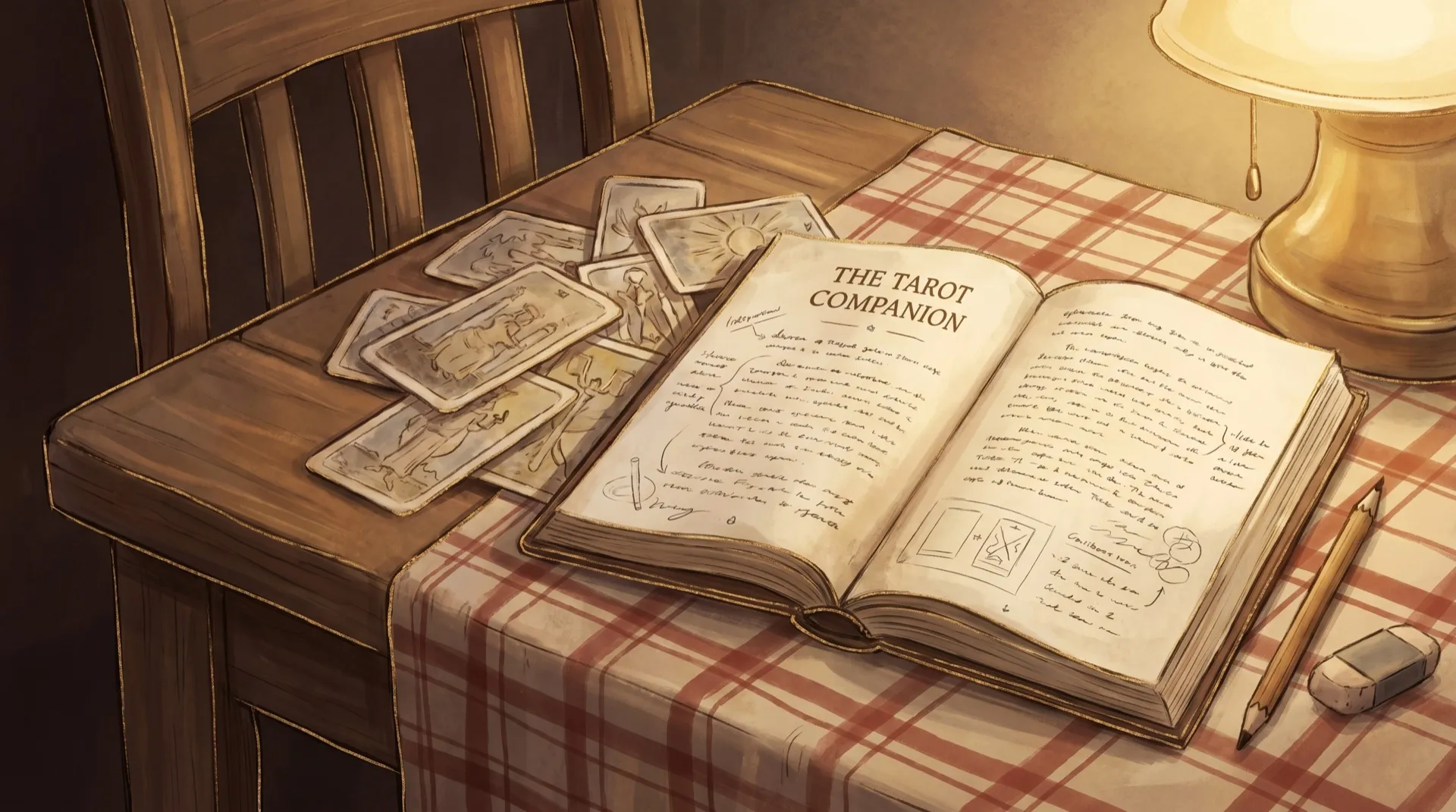
A woman emailed me last month with a question she’d clearly been carrying a while. She’d had a deck for two years. She loved the artwork, she’d read two books, and she still hadn’t done a reading for another person, because, she wrote, “I don’t think I have the gift. Nothing happens when I hold the cards. I think I might just be normal.”
I’ve been turning that phrase over since. I think I might just be normal. Twenty-plus years in this practice, and here is the most liberating thing I know about it: so am I. So is every reader I respect. The gift, in the way she meant it, the inborn electricity, the knowing that arrives from elsewhere, is not a requirement for reading tarot, because it isn’t what reading tarot is.
What reading actually is
Strip the velvet off and a tarot reading is three learnable acts. You know a vocabulary: seventy-eight images and the territories they map, the same way you once learned that red means stop. You notice a connection: this image, this person’s situation, this echo between them. And you say the connection out loud in a way the person can use. Vocabulary, pattern, articulation. Those are the whole job, and not one of them is mystical. They’re the same three muscles a good English teacher uses on a poem.
The reason readings feel uncanny isn’t a current passing through the reader’s hands. It’s the mechanism I unpacked in Can Tarot Cards Tell the Future?: a randomly drawn image meets a human life, and the life rushes in to complete it. The querent’s own mind does the heaviest lifting at the table. The reader’s craft is making room for that and then naming what shows up. Craft. Not lightning.
Where the gift myth comes from, and who it serves
The gifted-reader story has roots worth respecting and a modern use worth squinting at. The roots: in plenty of traditions, reading cards was a family craft, passed down, practiced young, woven into identity. From outside, a fourth-generation reader looks like someone born with something. From inside, she’s someone who started practicing at seven. We routinely make this mistake about every skill; the pianist’s child seems gifted too, right up until you count the hours.
The modern use is less innocent. “The gift” is a marketing apparatus. If reading is a learnable craft, then a reader is something like a good massage therapist: skilled, worth paying, replaceable. But if reading requires rare powers, then this reader, the one in front of you, is a scarce resource, and scarce resources command higher prices and ask fewer questions. The gift myth concentrates authority in the reader, and concentrated authority is exactly what you don’t want in a practice whose entire honest value is returning authority to you. It’s the same warning I’d give about anyone who claims their cards see what’s ahead: the bigger the claimed power, the faster you should walk. (The cousin myth, that a real deck must be gifted to you, has the same gatekeeping shape, and I took it apart in Is It Bad to Buy Your Own Tarot Deck?)
And notice who the myth quietly excludes: the curious woman with the two-year-old deck, waiting to be struck by something before she lets herself begin. The gift story didn’t protect her from anything. It just kept her in the audience.
What about intuition?
Here’s where I won’t overcorrect, because the debunker’s version (“it’s all just memorized meanings”) is false too, and anyone who has actually read for people knows it. There is something that develops with practice: the moment you look at the Five of Pentacles and, instead of reciting “hardship,” you hear yourself ask whose help is she refusing, and the question lands like it had an address. Readers call that intuition, and the word is fine as long as we’re honest about what it’s made of.
It’s made of pattern recognition, earned. Thousands of hands seen, hundreds of small calibrations: how people sit when money is the real subject, the half-second pause before “I’m fine.” Your mind compiles all of it below the waterline and starts serving up conclusions faster than you can show your work. That’s not a gift delivered at birth. That’s expertise, the same compressed knowing a veteran nurse has at a glance. It feels like magic from the inside. It’s hours, organized.
Which means it’s available. To the emailer with the quiet deck, to you. The noticing you’d bring to a friend’s story over coffee, the way you already hear what your sister doesn’t say on the phone: that’s the raw material, and most women I know have been practicing it unnamed for decades.
How you’d actually learn
If the gate is open, here’s the path I’d walk a beginner down. Get a Rider-Waite-Smith or a close descendant, since nearly everything written speaks its imagery. Learn the cards in clusters rather than one at a time: the four suits as four territories (feeling, thought, work, and the material world I toured in Which Tarot Cards Mean Money?), the Majors as the big chapters. Then practice on the only rhythm that compounds, a small daily draw with one written line, the practice I laid out in How Often Should You Do a Tarot Reading? Follow along with the daily three cards here if you want training wheels with company.
Expect to be clumsy for a season; you’re learning a language, and nobody’s first sentences are poetry. The day you catch yourself reading a card in your own words instead of the booklet’s, you’ve crossed the only threshold there is. Nobody hands out a certificate. You just notice, one Tuesday, that the cards have started talking in your voice, which is what they were always going to do, since, as I keep saying around here, the deck’s wisdom was on your side of the table the whole time.
Common questions
How do I know if I’m intuitive enough to read tarot?
If you’ve ever known a friend was upset from the word “fine,” you’ve already passed the only entrance exam. The intuition readers rely on is ordinary human pattern-noticing, sharpened by practice with the cards. It grows on the job. Nobody starts with it in the form they end with.
Can you learn tarot entirely from books and still be a real reader?
Yes, with one amendment: books give you the vocabulary, but readings teach you to speak. Read for yourself daily, then for patient friends, and let the booklet’s meanings slowly turn into your own phrasing. A “real reader” is just someone whose interpretations have been worn smooth by use, the way a self-bought deck becomes yours by handling, not by ceremony.
What separates a good reader from a bad one, if not a gift?
Honesty and restraint, mostly. A good reader keeps the authority on your side of the table, says “I don’t know” without flinching, and never inflates a card into a forecast or a diagnosis. A bad reader can be dazzlingly “gifted” in presentation and still fail every one of those tests. Craft you can practice. Character you have to choose, every reading.
Reading this fresh off a draw? Today's three-card reading and your sign's daily page are the short-form companions to the longer essays here.
Where to go next