Major Arcana · XIII + XVII
Death and The Star Tarot Combination
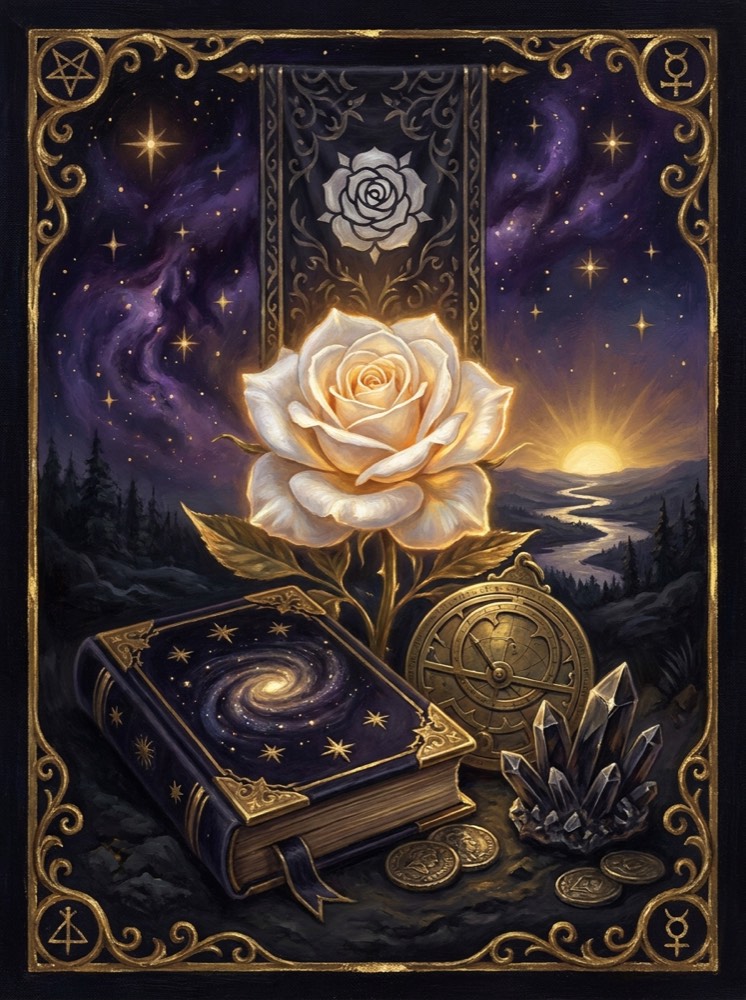
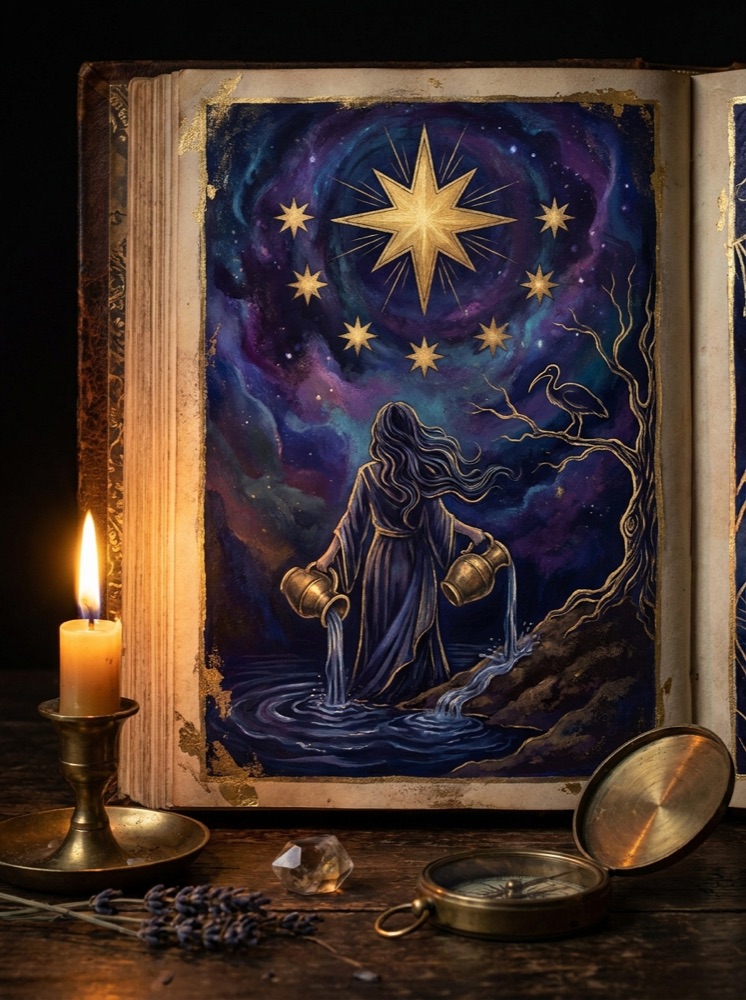
Read each card on its own first: Death meaning · The Star meaning.
People draw these two cards after a loss. That is not speculation; it is the context that sends most people searching for what Death and The Star mean together. And the question underneath the search is usually the same one: does renewal actually follow, or is that just something people say?
I want to answer that honestly rather than comfortably.
When Death and The Star Meet
Death at card XIII in the Rider-Waite-Smith deck is not a threat; it is an acknowledgment. The skeleton in black armor moves through a landscape where king and bishop and maiden stand helpless before a force that treats everyone equally. The river behind the rider keeps flowing. In Rachel Pollack’s reading, Death is the principle that allows life to move: what has genuinely completed clears the ground for what comes next. The card does not ask whether the ending is painful. It only asks whether the ending is real.
The Star at card XVII is one of the gentlest images in the Major Arcana. A figure kneels at a pool, pouring water from two pitchers, eight stars above her. The posture suggests not effort but patience, not triumph but tending. Mary K. Greer reads The Star as the soul’s own capacity for renewal, the part that continues its quiet work once the false structures have been cleared. It is not the same as happiness. It is something quieter and more durable: the capacity to remain open.
Together, they map a specific arc. Something ended. Something can grow. The arc is real. What stays uncertain is the timing, the shape of what grows, or the path between the two.
The Tension Between These Cards
The particular cruelty of this pair, if you are sitting with a recent loss, is that The Star doesn’t arrive fast. Death completes; The Star tends to what follows. But the tending is slow work, often invisible, and it requires a kind of patience that grief doesn’t make easy.
The risk in reading these cards together too quickly is treating The Star as a promise. “Death brings The Star” becomes a shortcut that lets a person skip the actual work of loss — the metabolizing, the sitting with what is gone, the period of not knowing what comes next. The Star is not a compensation for Death. It is a description of what the ground can do when the process is allowed to complete rather than rushed.
This is where the reading tends to matter most: not in confirming that renewal is real (it is), but in confirming that the grief is real too, and that the second thing cannot be borrowed against the first.
This Pair in Love, Money, and Energy
In love, Death and The Star together often surface when a relationship has ended or changed in some irreversible way — a breakup, a death in the literal sense, a love that ran its full course. The Death meaning holds the principle of necessary completion; the Star meaning holds the quiet assurance that the person’s capacity to care and to connect has not been extinguished by the loss. It can be worth distinguishing those two things when the pair comes up: what ended, and what remains.
In money, this pair can reflect a chapter of financial loss or transition that has genuinely closed. The Death card may name an income stream, a job, or a way of working that has run its course. The Star tends to reflect the slower, quieter process of replenishing what was depleted — not a windfall but a gradual rebuilding, the kind that requires showing up in small ways before the larger shape becomes visible.
In energy, this is one of the combinations most associated with grief’s particular kind of fatigue. Not tiredness from doing too much, but the tiredness of carrying something that has become part of the landscape. The Star’s quality here is less about getting energy back and more about the permission to rest while the restoration happens at its own pace.
Reading the Two Cards Together
Read in numerical sequence, Death comes first and The Star follows by four cards — there are three between them (Temperance, The Devil, The Tower), which is itself worth noting. Renewal does not follow loss directly. There are stages, and some of them are uncomfortable.
What this pair tends to affirm, taken together, is that the arc from loss to renewal is real and that the person drawing these cards has the capacity to move through it. That is not a small thing, even if it is not the dramatic comfort that “everything happens for a reason” tries to offer. For a related look at how hope holds in more turbulent ground, The Tower and The Star explores a pair where the clearing was faster and more violent. For grief that sits alongside continued uncertainty, Death and The Tower holds a different texture.
A Question to Sit With
What are you tending right now, even in the grief — and what does that tending tell you about what still matters?
The Star doesn’t wait for the loss to be finished before it begins its work. It may already be present in the small acts of care that continue despite everything. That is where this pair tends to point when it is read honestly.
Where to go next