Major Arcana · XIII + XVI
Death and The Tower Tarot Combination
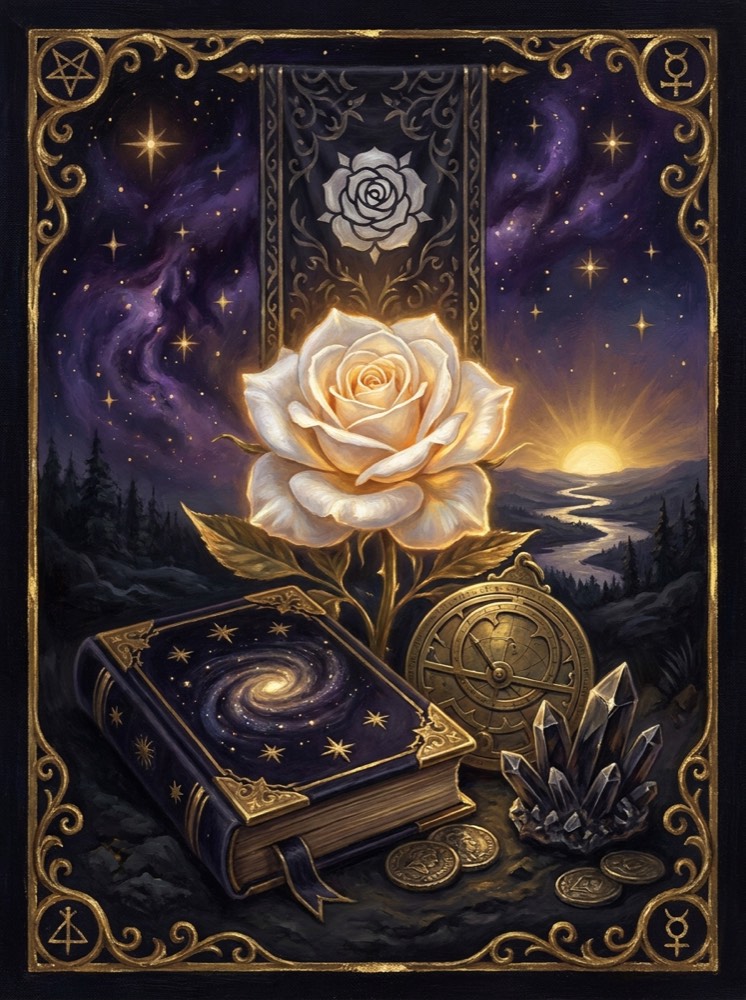
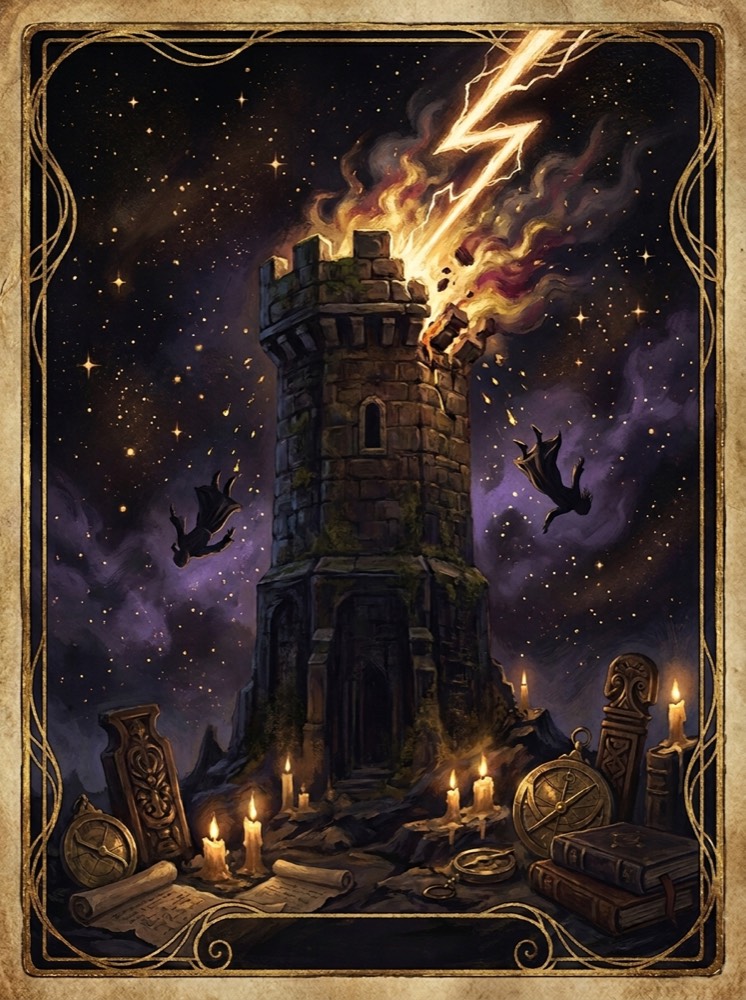
Read each card on its own first: Death meaning · The Tower meaning.
Of all the pairs in the Major Arcana, this is the one people brace for. Two of the deck’s most dreaded images, side by side: the skeleton on the white horse and the lightning-struck tower spilling its bodies into the dark. The instinct is to read double trouble, two disasters stacked. That reading misses what the cards actually hold together. Death and The Tower are both endings, yes, but they end different things, and the difference is the whole reading.
When Death and The Tower Meet
Death is the slow ending. In the Rider-Waite-Smith tradition it reflects a phase that has genuinely run its course — a relationship structure, an identity, a way of working that the person often already senses is finished. The river behind the rider keeps flowing. The ending is real but it is organic, almost gentle in its inevitability.
The Tower is the other kind of ending entirely: sudden, structural, unchosen. Where Death names what has quietly completed, The Tower names what gets knocked down before you were ready. Lightning, not a slow tide. So when the two appear together, they tend to describe a moment where something was already ending and the ending arrived faster and harder than expected. The thing you half-knew was over got taken out of your hands.
The Tension Between These Cards
Here is the paradox worth sitting with: two endings at once is often a faster clearing, not a compounded catastrophe. Death asks for a release you control; The Tower removes the choice. Together they can reflect the specific relief — uncomfortable, but real — of no longer being able to keep something on life support. The structure you were exhausting yourself to hold up has been taken down for you.
That does not make it painless. The tension in this pair is between what you were releasing on your own terms and what got released without your permission. One ending you might grieve as a decision. The other you grieve as a loss. The reading often lives in telling those two apart, because they ask different things of you afterward.
This Pair in Love, Money, and Energy
In love, Death and The Tower together may reflect a connection that was already changing when something broke the old shape of it suddenly. It is not a verdict on whether a relationship ends. It tends to ask whether what collapsed was the relationship itself or only the version of it that was no longer true. Read each card on its own — the Death meaning and The Tower meaning — before you decide what the pair is pointing at.
In money, this pair can mirror a slow-dying income stream or arrangement that ended abruptly rather than winding down. The question it often surfaces is whether energy was still being routed toward something already finished, and what the sudden clearing now makes room for.
In matters of energy and wellbeing, the two cards together often reflect the particular exhaustion of holding up something that has wanted to fall for a while. When The Tower lets it go, there can be a strange spaciousness underneath the shock — the tiredness of maintenance lifting.
Reading the Two Cards Together
Read in sequence, Death comes first and The Tower second by number, and that order tells a small story: the quiet ending you sensed, then the loud one that finished it. Neither card promises what grows back. What they share is the white space they clear. The honest reading of this pair is not “everything is falling apart.” It is closer to “what was already over is now unmistakably over, and the ground is bare.” For the other side of that bare ground, the The Tower and The Star pairing is worth a look. To stay with the grief a moment longer, see Death and The Star.
A Question to Sit With
What did this clearing take that you were already letting go of — and what did it take that you weren’t?
Carry that for a few days rather than answering it fast. This pair rarely points to a surprise about what ended. It tends to point at the gap between the ending you chose and the one you didn’t, because those two heal on very different timelines.
Where to go next