When the Same Tarot Card Keeps Appearing
Drawing the same card again and again? The honest math behind repeats, the psychology of noticing, and the one question a recurring card is good for.
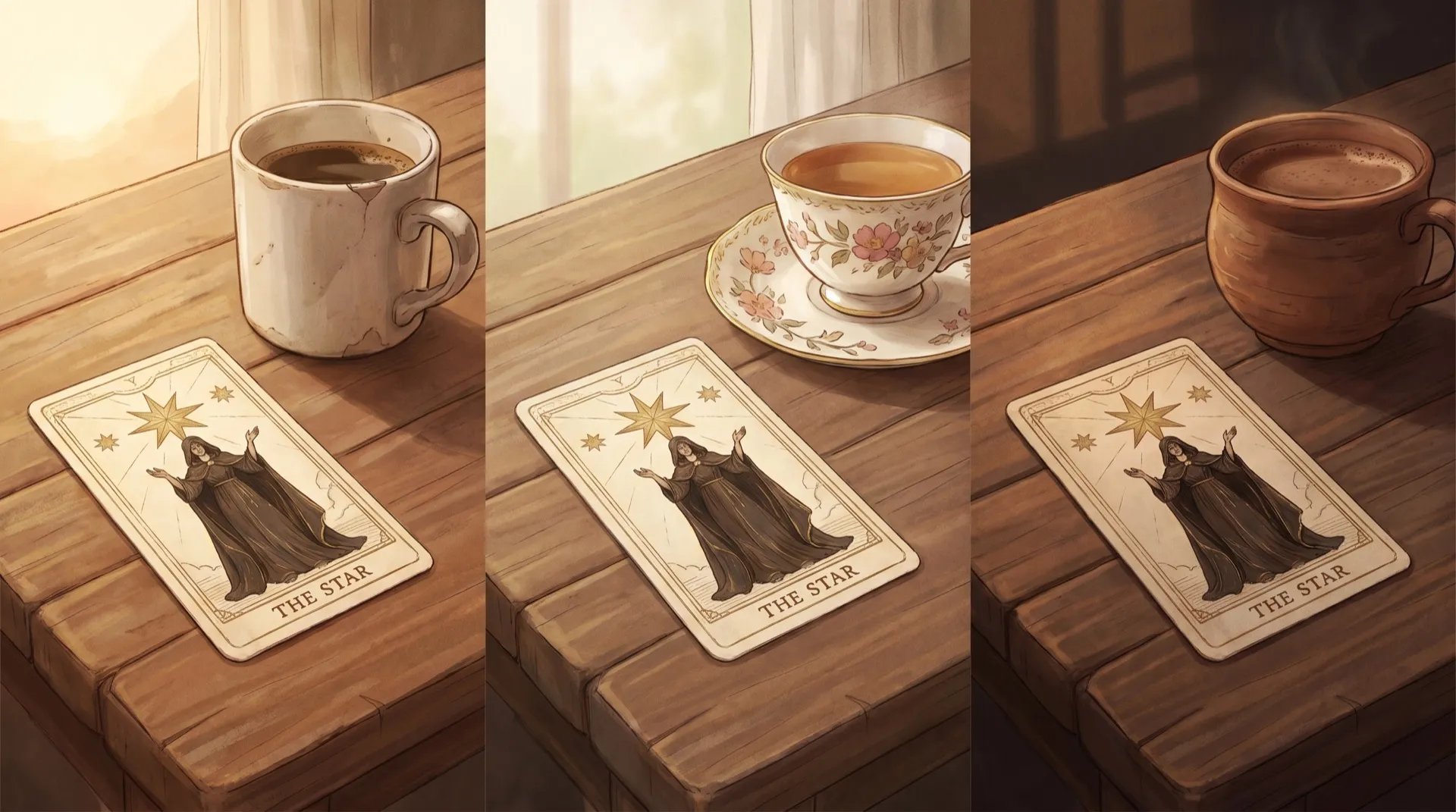
Readers write in with a story like this all the time, and it’s easy to see why. Draw daily for a few weeks and one card can start to feel like it’s following you: the same figure, the same scene, showing up in reading after reading until you start checking the deck for sticky cards.
So when someone writes to ask what it means that the Knight of Swords has shown up five times this month, I take the question seriously. It’s one of the most common experiences in this practice, and almost everything written about it gives you one of two unsatisfying answers: pure mysticism (the card is chasing you) or pure debunking (it’s nothing, shuffle better). The honest answer is more interesting than both.
First, the math, because you deserve it
A standard tarot deck holds 78 cards. Draw one card a day and the chance of any particular card on any particular day is small; but the chance of some card repeating noticeably across a month is high. Across 30 daily draws you’ll average a few repeat appearances of something, and every so often, by clean probability alone, a card shows up three or four times in a couple of weeks. Streaks live inside randomness. They’re not a glitch in it; they’re what it looks like up close.
Add the human layer. You don’t notice the cards that don’t repeat. Nobody emails me about the 40 cards that appeared once and left. The repeat gets flagged, remembered, and then actively watched for, and once you’re watching, the next appearance lands with a thud the first one didn’t have. Psychologists have names for the machinery here (the frequency illusion, confirmation bias); I just call it what a reader sees at the table: attention makes its own echoes. The same machinery, by the way, powers the feeling that everything breaks during certain weeks of the year, which I wrote about in Mercury Retrograde and the Fine Print. It is also why 1111 on the clock seems to follow certain people around for a season.
So is the recurring card just noise plus noticing? Here’s where I part ways with the pure debunkers, because that conclusion misses what a reflective practice is actually for.
The meaning isn’t in the deck. It’s in the snag.
Remember the working model of tarot, the one I laid out in Can Tarot Cards Tell the Future?: the draw is random, and the reading is what your life does when it meets the image. Apply that here and the recurring card stops being a mystery about probability and becomes a fact about you.
Seventy-eight images pass through your hands. One of them snags. Not because the deck is sending it, but because something in you catches on it every time it surfaces. The Eight of Cups didn’t follow me that autumn. The truth is less mystical and more useful: I was a person mid-decision about leaving something I’d built, and that particular picture had a hook shaped exactly like my situation. Any week it appeared, it would have snagged. It appeared often enough, as cards do, and my attention did the rest.
This is why I tell people: the repetition is not the message. The snag is the message. The question is never why does this card keep coming up. The question is what does this card touch that stays touched.
What to actually do with a recurring card
Here’s the practice I use, and it takes one evening, a notebook, and no special gifts (on which subject, no, you don’t need to be gifted).
Take the card out of the deck and put it where you can see it. Then write three things. First, the textbook meaning, briefly; look it up if you need to. Second, and this is the real work: what you thought of the very first time it appeared this streak. Not the card’s meaning. Your flicker. The person, the decision, the unfinished thing that crossed your mind in the half-second before you started interpreting. That flicker is the snag, and people almost always know it instantly when asked directly. Third, write what would have to change in your life for this card to become boring. That last question sounds odd and works strangely well. The Eight of Cups got boring for me the month I actually left. Recurring cards retire when the thing they touch gets handled.
One more honest note about the notebook: date the entries. A recurring card read across dated pages becomes a record of how the snag is changing, loosening, sharpening, going quiet, and that record is the closest thing this practice has to evidence. Mine, from that autumn, reads like a person climbing down a ladder one rung a week.
Then put the card back and keep your normal rhythm, whether that’s a daily draw or the weekly pattern I sketched in How Often Should You Do a Tarot Reading? Don’t start pulling extra cards to interrogate the streak. Chasing a repeat with more shuffling is how a reflection practice turns into a slot machine.
When the card is heavy
One careful note. Sometimes the recurring card is one of the deck’s hard ones, the Tower, the Three of Swords, the Moon, and the streak starts to feel ominous, like the deck is escalating. It isn’t, and this is exactly where the math matters emotionally: hard cards repeat at the same rate as gentle ones, and a streak of them forecasts nothing, because no card forecasts anything. But if a heavy card keeps snagging, that’s still information, the same kind as before. Something in you is tender in that card’s territory. If it’s the worry-and-fog territory and it stays tender for months, the kindest move might not be another reading at all; I wrote about that boundary, and about when the right appointment is with a counselor rather than a deck, in The Moon Card, Worry, and When to Talk to Someone.
Common questions
Does a recurring card mean the deck is trying to tell me something?
The deck has no intentions; the draw is genuinely random, and streaks are normal probability being itself. What’s meaningful is your reaction: out of 78 images, this is the one that stays charged. Treat the repetition as a flag your own attention is waving, and ask what the card touches rather than why it returns.
Should I remove a recurring card or reshuffle more carefully?
Shuffle as you like, but don’t remove the card; that treats the symptom and wastes the information. Also worth checking, in the spirit of honesty: physical decks do develop favorites. A card that’s slightly bowed, sticky, or always returned to the same spot can genuinely surface more often. Riffle a borrowed deck a few times before deciding the universe is involved.
What if the same card appears in readings from different decks?
Same answer, with a better punchline: it confirms the snag is in you, not in the cardboard. Different decks, same hook. That’s not spooky, it’s diagnostic, and it means the card has done its job twice. The next move isn’t a third deck. It’s the notebook, the flicker question, and probably the conversation or decision the card keeps pointing at.
Reading this fresh off a draw? Today's three-card reading and your sign's daily page are the short-form companions to the longer essays here.
Where to go next