The Tower Card and the Emergency Fund
Tarot’s card of sudden change reads like a layoff, a roof leak, a diagnosis. What the Tower teaches about preparedness, insurance, and soft landings.
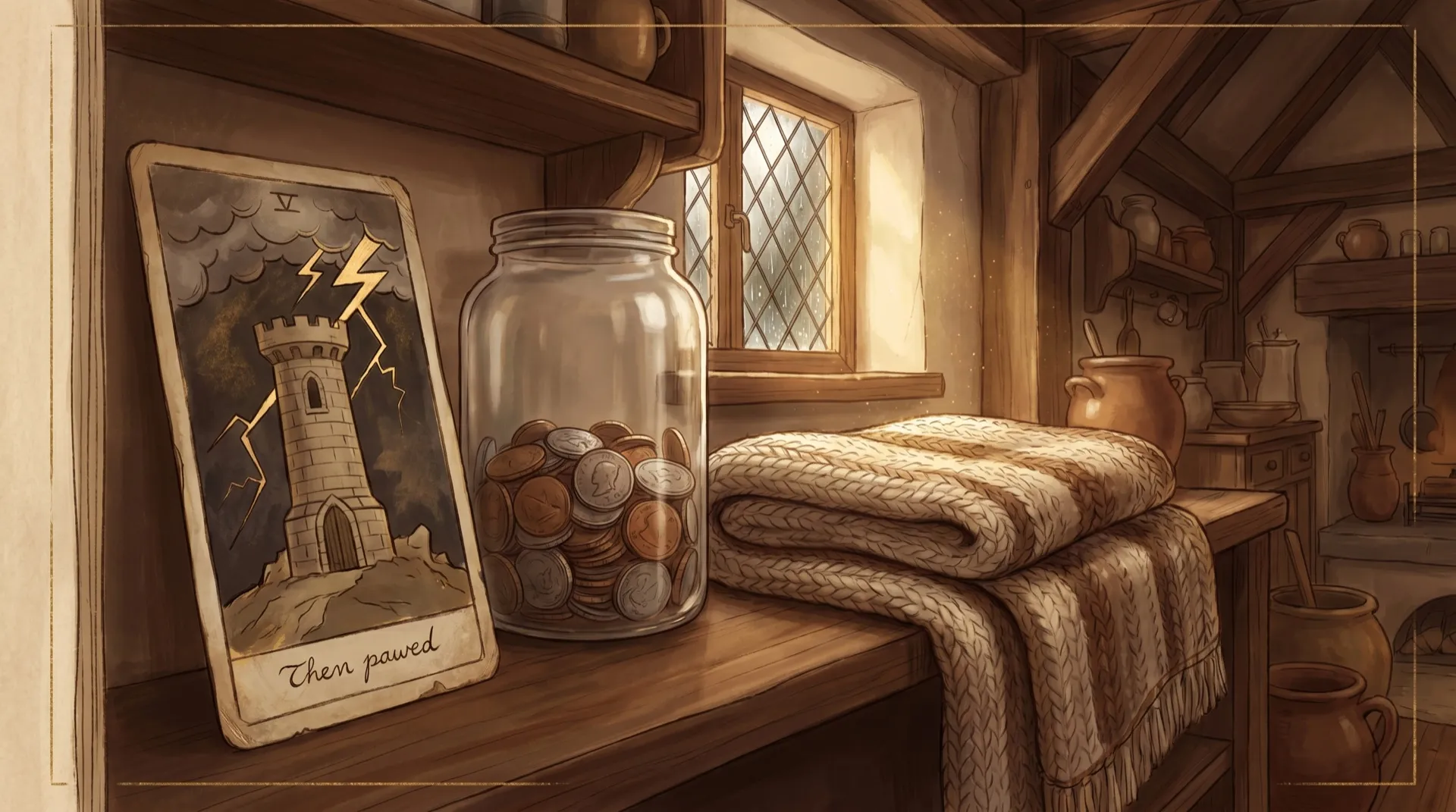
Nobody likes pulling the Tower. It’s the card readers get asked to take back: a stone tower struck by lightning, the crown blasted off, two figures falling headfirst into the dark. People look at it and see their own private list. The layoff email. The transmission giving out the same month as the dental work. The call that starts with “are you sitting down.”
I’m not going to soften the card, because softening it wastes it. The Tower is the deck’s honest admission that some changes arrive without consultation. But I’ve come to read it less as a card about disaster and more as a card about architecture. The lightning is not the variable you control. The building is.
What the Tower actually marks
In the traditional reading, the Tower is sudden upheaval: the collapse of a structure that looked permanent. The detail that matters is in the image itself. The tower is built on a jagged peak, crowned in gold, windows lit, and the old commentaries are blunt about it: the structure was flawed before the lightning found it. False premises, deferred maintenance, a crown placed on something that couldn’t hold one. Numerology files this same weather under angel number 555, the change number; the two readings are close cousins.
That’s the recognition the card trades in. Most of us, sitting quietly, can name the tower in our own life: the job we know is one budget cycle from cuts, the roof we’ve been re-tarring instead of replacing, the arrangement that works only as long as nobody gets sick. We don’t talk about these. The Tower’s whole function is to make the not-talking harder.
The lightning you can’t schedule
Here’s the statistic-shaped truth without the statistics: nearly everyone, over a long enough life, takes a Tower hit. A job loss. A medical bill that rearranges the year. A separation that splits one household’s expenses into two. The folklore around this card treats it as rare and dramatic. The honest version is that it’s ordinary and dramatic. The drama is real; the rarity is a story we tell so we don’t have to prepare.
And this is where the card stops being mystical and becomes almost embarrassingly practical, because the things that change what a Tower moment does to a life are boring. An emergency fund, even a modest one, the kind that turns a catastrophe into a difficult month. Insurance that’s actually read before it’s needed: what the renter’s policy covers, what the deductible really is, whether the disability coverage through work would hold the mortgage or just the groceries. A resume that isn’t four years stale. None of this prevents lightning. All of it decides whether the figures in the card fall two stories or twenty.
What’s reflection and what’s a professional’s job
Let me draw the line clearly, because this is the territory where readers can do real harm. Tarot can ask you whether you’re prepared. It cannot tell you how much to save, which policy to buy, or what to do about the debt. How many months of expenses belong in your emergency fund depends on your income, your dependents, and your field; that’s a conversation for a financial advisor or even the free counseling many credit unions offer. Whether your coverage is adequate is a question for an insurance professional you’ve made sit still and explain the exclusions. The cards are for the night before those appointments, when you’re getting honest about what you’ve been avoiding. The formal version of this boundary lives on our disclaimer page. The plain version is: we write about cards, we don’t write policies.
What the card is for is the avoidance itself, and that’s not a small thing. Most under-preparedness I’ve seen wasn’t ignorance. The woman who hasn’t opened the pension statement in three years knows roughly what she’d find. Avoidance is a feeling problem wearing a finance costume, and feelings are exactly the layer a reflective practice can reach.
A Tower reading that’s actually useful
If the Tower has turned up for you, or if you just felt your stomach move while reading this, here’s the exercise I give people. No predictions involved.
Take a blank page and write down your towers: the structures your life currently rests on. Income, housing, health, the two or three relationships that hold the logistics together. For each one, two questions. What’s the crack I already know about? And if lightning hit this tower on a Tuesday, what would Wednesday look like?
Most people discover the same two things. First, that one tower frightens them far more than the others, and they’ve been managing that fear by not looking at it. Second, that “Wednesday” is survivable in every case where there’s any cushion at all, and genuinely frightening only where there’s none. That second discovery usually does more for a savings habit than any lecture about compound interest ever has.
Then make one appointment. Not five. The insurance review, or the advisor consult, or the hour with the benefits portal. One. The exercise fails when it becomes another tower of its own, a renovation plan so total it never starts. Preparedness compounds like anything else: a small fund this year, a read policy the next. The figures in the card didn’t fall because they prepared imperfectly. They fell because the crown went on before the foundation was questioned.
The card behind the card
There’s a reason the Tower sits where it does in the Major Arcana, two cards after Death, which marks slower, more organic endings. The deck’s sequence is honest about the difference: some chapters close gently and some get struck. But in both cases the next card matters. After the Tower comes the Star, the quiet card of recovery, of finding water in the dark. People who’ve actually lived through a Tower year tell you the same strange thing: the collapse took things the rebuild never asked back. Smaller house, better mornings. Lost the title, kept the spine.
I don’t say that to romanticize disaster. Some losses are just losses. I say it because the fear of the Tower is usually fear of annihilation, and what’s on the other side is almost always reconstruction, done by the same hands that built the first tower, now with better information about bedrock.
Common questions
Does pulling the Tower mean something bad is about to strike?
No. Tarot doesn’t schedule events, and a card is not a forecast; I’ve laid out the full argument in Can Tarot Cards Tell the Future? When the Tower appears, read it as a flashlight on the structures you’ve stopped inspecting. The card has done its work if you check the foundations, whatever the weather does.
Is the Tower ever a good card?
Often, in the dry way medicine is good. It names necessary collapse: the arrangement that was costing more to maintain than it returned, the false front that took daily effort to hold up. People midway through leaving a wrong-shaped life sometimes greet this card with visible relief.
What should I actually do after a Tower reading?
One concrete act of preparedness within the week. Open the statement you’ve been avoiding, read the policy, start the fund with whatever amount is honest. The reflection was the card’s half; the appointment is yours. Then, if you want the daily-scale version of this practice, the three cards of the day are a gentler place to keep the habit. And if you want the Tower itself in full, here is the complete Tower card meaning, upright and reversed.
Reading this fresh off a draw? Today's three-card reading and your sign's daily page are the short-form companions to the longer essays here.
Where to go next